
Cross-border exercises are needed to overcome crises
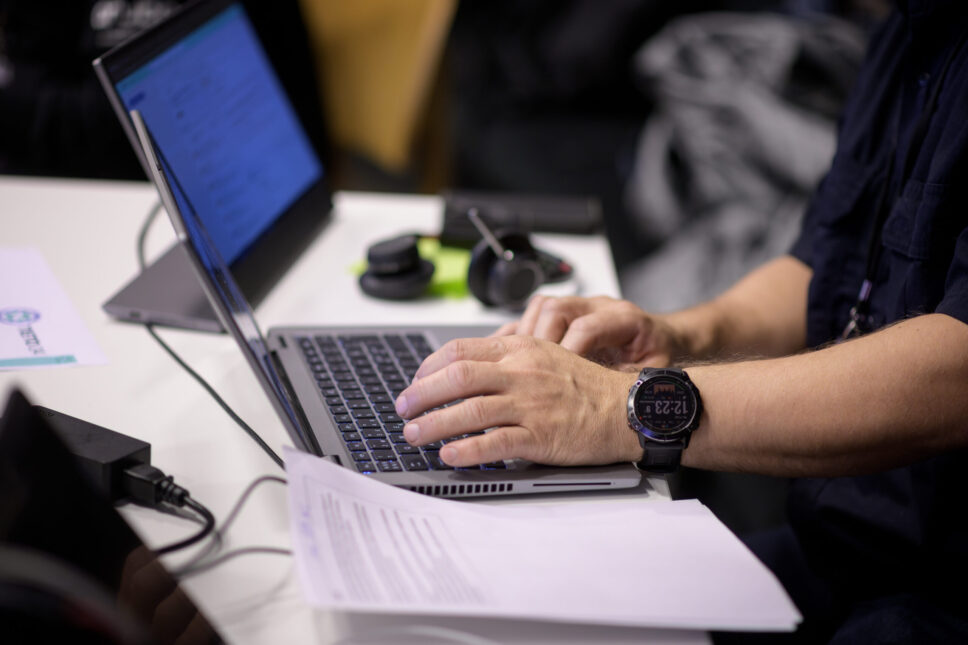
As the global security situation has become more tense, the importance of international preparedness training has increased. In Finland, the TIETO exercise is expanding across borders, and Sweden is currently developing its civil defence exercise structure.
In spring 2025, the Iberian Peninsula suffered extensive and sudden power outages. Public transport came to a sudden halt, food supply chains were interrupted and network connectivity problems made it difficult for information to flow in Spain, Portugal, Andorra and parts of France.
What was initially suspected to be a cyberattack, eventually turned out to be a technical fault in the electricity network, but it still served as a reminder of how vulnerable modern society is. Disruptions do not stop at national borders.
“It is increasingly important to extend preparedness training beyond national borders, so that crises and disruptions can be overcome quickly and society remains functional,” says Katri Liekkilä, Head of International Relations at the National Emergency Supply Agency (NESA).

The crown jewel of Finnish preparedness training is the TIETO exercise, which is organised every two years. It brings together the organizations critical to the security of supply of Finnish society, from businesses to authorities and the third sector.
More realism and cross-border cooperation in exercises
The most recent TIETO exercise was organised in 2024. Its intensive phase simulated hybrid attacks on the energy and logistics sectors. The exercise demonstrated the importance of cross-sectoral cooperation in crises.
According to the feedback collected from the participants in the exercise, trust and solidarity strengthened, but cooperation between sectors and countries left room for improvement in some areas. TIETO26 addresses this shortcoming.
Finland’s most important preparedness training partner is Sweden.
Concrete, cross-border situations are introduced to the scenarios of the TIETO26 exercise. This allows companies with operations in Finland and Sweden, for example, to test and develop their cooperation, contingency plans and crisis communications in realistic situations with authorities and different partners.
“For example, the energy industry has a long tradition of joint exercises in the Nordic countries. At the local level, the exercises organised by rescue departments and municipalities also bring together water services, energy companies, infrastructure actors and other organizations,” says Liekkilä.
Sweden develops its preparedness training
Preparedness training is also being developed in Sweden. The way trainings are organized nationally differs from the Finnish model in many ways. In Sweden, the responsibilities have been decentralised to authorities in different sectors. The Swedish Civil Contingencies Agency’s (MSB) main task is one of coordination and support.
In Finland, on the other hand, NESA has permanent cooperation structures covering the entire society. They bring the public and private sectors together around the same table.
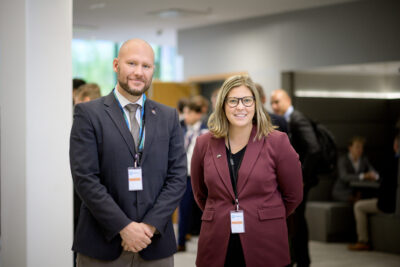
“In future, we will have even more clear responsibilities when it comes to managing both crisis preparedness and the civilian part of the total defence, as well as a national responsibility for coordinating security of supply in Sweden. This means new tools, but also new obligations in the development of training and cooperation,” says Hanna Waerland-Fager, Strategic Advisor at MSB, with placement at the Embassy of Sweden in Helsinki
The new responsibilities also mean a new name. At the beginning of 2026, MSB will change its name to the Swedish Agency for Civil Defence and Resilience.
International participants also participating in the exercises in Sweden
The Exercise Total Defence series, which will run for several years and continue until 2027, is currently being implemented in Sweden. The series will culminate in a new kind of comprehensive security exercise, to which international participants may also be invited.
“We want the authorities and the private sector to train together. This way, we will know what competence and resources are available at the time of a crisis,” says Waerland-Fager.
According to both Waerland-Fager and Liekkilä, the internationalisation of preparedness exercises is progressing gradually. At the start, foreign organizations will only be participating in the role of an observer.
“Joint planning from the outset is necessary so that the exercise scenarios are relevant for both and the questions of authority are clear. Planning also requires a common understanding of the goals of the training and which capabilities that need to be tested,” says Waerland-Fager.
Although Sweden is Finland’s most important partner, Liekkilä emphasises that joint exercises will also be developed with Estonia and other Baltic countries, for example. Immediate proximity to Russia creates common interests and training needs.
“The Nordic and Baltic networks regularly exchange information and monitor each others’ exercises. Disruptions in other countries, such as the extensive power outages in the Iberian Peninsula, often serve as inspiration for the scenarios,” says Liekkilä.
Preparedness at Nordic and EU level
Being a member of the EU and NATO also increases joint preparedness training. The EU’s CER and NIS2 directives introduce new requirements. The CER (Critical Entities Resilience) Directive is aimed at improving the resilience of society’s critical services. The NIS2 Cybersecurity Directive, on the other hand, aims to ensure a common level of cybersecurity in the EU.
All this adds pressure to develop cross-border exercises.
“EU exercises are often focused on decision-making and the flow of information between different countries. Finland specialises in how the business sector can be connected to the training. This type of cooperation does not exist anywhere else,” says Liekkilä.
According to Hanna Waerland-Fager, EU-level cooperation complements the NATO and Nordic exercises. It provides a comprehensive safety and preparedness framework, including civilpreparedness.
International crises also raise issues of jurisdiction: in cross-border situations, the legislation of different countries determines who can act and with what mandate. According to Liekkilä, this is emphasised at EU level.
“Joint decision-making, as seen in the joint procurement of pandemic vaccines, can significantly speed up response times. The implementation of the CER Directive in different countries also determines which organizations are considered critical and how their preparedness is managed and monitored.”
Added value for companies in risk management
In Finland, trust between the public and private sectors has been built over decades. This makes joint training particularly effective.
“International exercises offer companies the opportunity to test their operating models with the entire supply chain. This ensures business continuity even in the event of a crisis,” says Liekkilä.
“It is important that the units that operate in both countries participate in the exercises. This allows us to genuinely model cross-border situations,” says Waerland-Fager.
Looking to the future
The TIETO26 exercise focuses on food supply chains, including water supply. Cooperation with Sweden is not only seen as topical, but also necessary.
“With cross-border crises, cross-border exercises are required. TIETO26 is a step towards a permanent, international exercise culture and more robust crisis resilience in the region,” says Liekkilä.
Lisätietoja

Text: Leena Filpus / Kubo