
The Swedish food industry seeks to learn from Finland in preparedness

In our western neighbour, preparedness in food supply relies heavily on market forces and corporate flexibility, but the close cooperation between the public and private sectors in Finland is attracting interest.
What can the countries learn from each other in an increasingly tense security situation? Patrik Strömer, policy expert from The Swedish Food Federation (Livsmedelsföretagen ), will arrive in the autumn to learn about Finnish preparedness at Finland’s TIETO26 preparedness exercise.
TIETO26 is an extensive preparedness exercise for disruptions, which develops the preparedness of the participants as well as the cooperation between authorities and companies. The exercise, organised in September, will focus on food supply and the functionality of its supply chains in severe disruption situations.
When society faces a severe disruption, the continuity of food supply is one of the first basic pillars that must be secured.
In Sweden, the building of national civil preparedness has begun in earnest since 2016. At the same time, the security environment has changed radically: first the COVID-19 pandemic struck, followed by Russia’s war of aggression in Ukraine.
“We have had to practise directly in real-life situations,” notes Patrik Strömer.
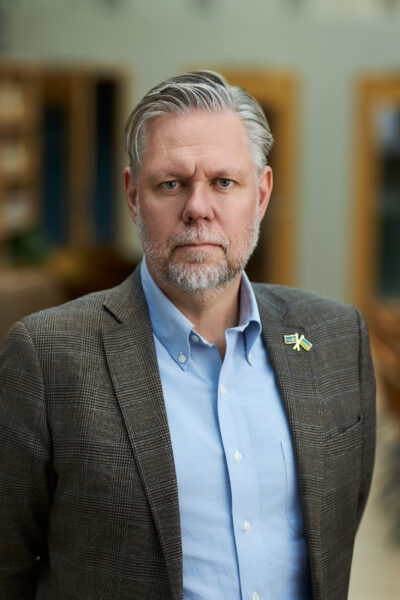
During the pandemic, the Swedish government and the private sector met weekly to solve emerging problems. According to Strömer, the most essential factor in surviving crises is the flexibility of official regulations so that companies can operate.
“One concrete example from the pandemic was foreign seasonal labour in agriculture, particularly from Ukraine. According to the rules, a negative corona test less than 48 hours old was required for entry. When travelling by car across Europe, that was an impossibility. We managed to negotiate with the ministry for a 72-hour time limit for the test, which enabled the labour force to enter the country and primary production to continue.”
Market orientation and flexibility at the core of preparedness
The Swedish preparedness organisation is currently divided into 12 different sectors. The Beredskapssektorn Livsmedelsförsörjning och dricksvatten (Preparedness Sector for Food Supply and Drinking Water) has its own designated person in charge and regular, monthly meetings between authorities and companies.
In these meetings, companies and authorities share a situational picture and information on the sector’s development, but more formal structures, such as The National Emergency Supply Agency, the pool system, and material preparedness, are missing. Thus, the Swedish model of preparedness is looser than in Finland.
Although the Swedish food market is approximately twice the size of the Finnish market and hosts large global companies, the country’s degree of self-sufficiency is slightly lower than Finland’s. Strömer strongly trusts that companies are the most effective at solving the logistical and productional challenges of crisis situations themselves.
“Food always finds its way. As we have seen in Ukraine, the food supply works despite the war. A complex supply chain does not automatically mean vulnerability. The fact that we have many operators also means that we have more decentralised opportunities to solve local problems,” Strömer points out.
Cybersecurity, dependencies, and the burden of the NIS2 Directive
The modern food industry is entirely dependent on other critical infrastructure: water, electricity, and functional logistics. One of the greatest emerging threats is the digital vulnerability of the operators.
Strömer highlights a recent cyberattack on an IT service provider in Sweden, which paralysed the logistics of packaging and transport materials for the food industry.
“The attack was not aimed directly at the food industry, but packaging and transport materials are vital to the supply chain. Suddenly, all orders had to be made manually, which slowed down logistics significantly. Fortunately, this was not visible to consumers, as our system withstood the impact. Behind the scenes, however, the situation was extremely difficult.”
The goal of EU cybersecurity regulation, such as the NIS2 Directive, is to improve cybersecurity within the EU by, among other things, obligating critical companies to improve risk management and report on information security breaches. However, in Strömer’s opinion, cybersecurity regulation places too much emphasis on administrative reporting at the expense of actual problem-solving.
“Companies already have a very strong built-in interest in protecting themselves from cyberattacks – if you do not do it, you are soon out of business. Instead of reporting obligations, companies’ focus should be on the continuous improvement of their protection capabilities.”
Geography dictates the need for cooperation
Strömer wants to highlight the need for cooperation in the north during crisis situations.
“In Sweden, food is produced in the south, which means that during a crisis, Northern Sweden is actually closer to Finland and Norway than to Stockholm. Therefore, in preparedness, we must think about cross-border east-west cooperation in the north,” Strömer ponders.
“Finland is currently a super important partner for Sweden. We are no longer alone, but we understand our responsibility as part of the broader security of the Baltic Sea and Baltic region,” Strömer describes.
The large-scale TIETO26 preparedness exercise, culminating in Finland in the autumn, brings together food sector companies and authorities to practise for severe cyber and information influence situations. Strömer is coming to Finland to learn from the Finnish cross-sectoral cooperation model.
“The Swedish food sector does not yet have large-scale joint exercises between the business community and the public sector like the TIETO exercise. I am inspired by the Finnish model and want to learn how we could organise something similar on a smaller scale. In particular, I want to identify ‘black swans’ – scenarios that we cannot even anticipate, but which could cause major multiplier effects.”
The importance of practising becomes concrete in surprising everyday situations. As an example, Strömer mentions the extensive wildfires in Sweden in 2018. The firefighters working on extinguishing the fires were provided with normal meals, even though there was no time to eat. “They would have needed quickly consumable, easily portable, energy-dense nutrition. You do not learn these kinds of things at the planning table, but by testing and practising.”
Trust is built before a crisis
In the future, preparedness cooperation between Finland and Sweden will intensify. Even now, The Swedish Food Federation and the Finnish Food and Drink Industries’ Federation have close cooperative relations in preparedness and in influencing EU decision-making. According to Eero Alaluusua, Crisis Preparation Manager at the Finnish Food and Drink Industries’ Federation (ETL ), informal sparring and the exchange of situational pictures can progress towards concrete operational cooperation, such as joint exercises.
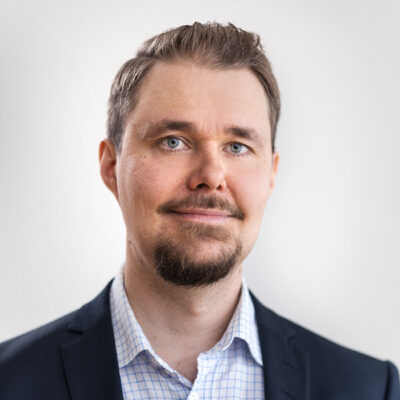
“Mutual sparring and information exchange, increasing understanding, and sharing best practices play an important role in the current cooperation between the organisations,” says Alaluusua.
Also in EU decision-making, when negotiating strategic stockpiling and the direction of the Preparedness Union, for example, a joint Nordic voice carries further. The measures of the EU Preparedness Union Strategy, launched by the European Commission in spring 2025, aim to improve the EU’s ability to anticipate, prevent, and respond to these threats.
At the centre of all preparedness, however, is the human factor: trust.
“Real-time data has no value if we cannot make quick decisions and communicate them transparently to stakeholders and consumers. Trust across organisational boundaries must be built before a crisis – and that is exactly where close contact and joint exercises are invaluable,” Strömer summarises.