
Directory service for cybersecurity risk management products and services
A classification based on the internationally recognized and widely used cybersecurity risk management process model (NIST CSF 2.0), particularly for meeting the compliance requirements of the NIS2 Directive.
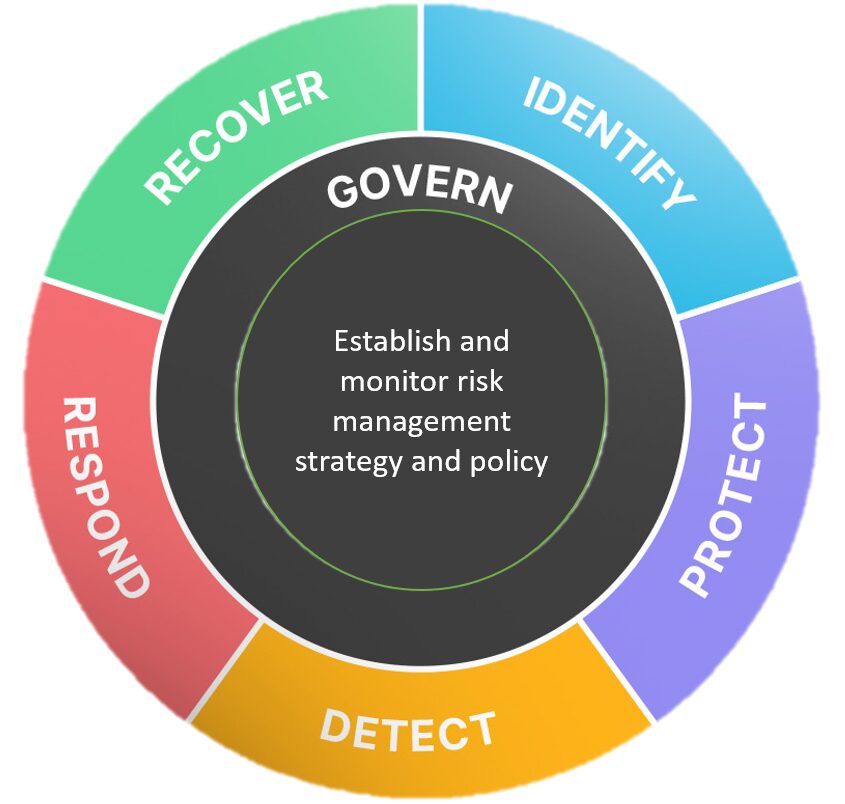
NIST CSF 2.0 (National Institute of Standards and Technology Cybersecurity Framework 2.0) is an updated version of NIST’s cybersecurity framework. This framework helps organizations manage cybersecurity risks effectively. CSF 2.0 provides high-level cybersecurity outcomes that can be applied regardless of an organization’s size, sector, or level of maturity.
NIST CSF 2.0 includes six core functions that support effective cybersecurity risk management:
Identify: Identifying and understanding the organization’s cybersecurity risks, assets, and operating environment.
Protect: Implementing safeguards to protect critical services and data.
Detect: Developing and implementing measures to enable the timely detection of cybersecurity incidents.
Respond: Planning and implementing measures to enable effective response to cybersecurity incidents.
Recover: Supporting and implementing measures that enhance recovery and ensure continuity of operations after cybersecurity incidents.
The purpose of the classification is to categorize and identify the cybersecurity products and services offered by the cybersecurity sector. Companies are listed in drop-down menus according to each process function.
Identify
- Identification and assessment of an organization’s cybersecurity risks
- Management of information and digital assets
- Selection of risk management measures
– Accenture Oy
– Agendium Oy
– Arctic Security Oy
– ASCiRI
– Binare Oy
– Bittium Oyj
– Candour Oy
– CGI Suomi Oy
– Check Point Software Technologies Oy
– Cinia Oy
– CSIT Finland Oy
– Cult Security Oy
– CyberDo Oy
– Cyberismo Oy
– Cybersec Oy
– Cyberwatch Oy
– Cyber Audit Company Oy
– Cybexer Technologies
– Cyblem Oy
– Daos Technologies Oy
– Deloitte Oy
– D-Fence Oy
– Difseco Oy
– Elisa Oyj
– Fitsec Oy
– Fortinet Finland Oy
– Fraktal Oy
– F-Secure Oyj
– Fujitsu Finland Oy
– Gofore Oyj
– Granite Partners Oy
– HoxHunt Oy
– ICT Elmo Oy
– iLOQ Oy
– Inclus Oy
– Insta Advance Oy
– Jetico Inc. Oy
– JMJping Oy
– Lehto Security Solutions
– Locotech Oy
– Loihde Oyj
– Microsoft Oy
– Mideye Oy
– Mint Security Oy
– Movial Oy
– NetNordic Finland Oy
– Netox Oy
– NGIT Oy
– DNV Cyber (Nixu Oy)
– Oivan Group Oy
– Opsec Oy
– Oy IBM Finland Ab
– Patria Aviation Oy
– PECB Group Inc
– Remod Oy
– Reversec Finland Oy
– Second Nature Security Oy
– Sectra Communications Oy
– SelfHack Oy
– Silverskin Information Security Oy
– Spear Innovations Oy Ltd
– SSH Communications Security Oyj
– Suomen Erillisverkot Oy
– Suomen Huoltovarmuusdata Oy
– Suomen Turvaposti Oy
– SUSE Software Solutions International Services Limited
– SyncShield
– Telia Cygate Oy
– Tietoevry Oyj
– Tikkasec Oy
– Tougher One Oy
– Trend Micro
– Truesec Oy
– Unikie Oy
– Vectra AI
– WithSecure Oyj
– Xiphera Oy
Protect
- Implementation and monitoring of risk management measures
- Technical and administrative security of information and communication systems
- Identity management, authentication, and access control
- Awareness and training
- Security of networks, information systems, and data platforms
- Resilience of information and communication systems
– Accenture Oy
– Agendium Oy
– Arctic Security Oy
– ASCiRI
– BaseN Oy
– Binare Oy
– Bittium Oyj
– Candour Oy
– CGI Suomi Oy
– Check Point Software Technologies Oy
– Cinia Oy
– CSIT Finland Oy
– Cult Security Oy
– CyberDo Oy
– Cyberismo Oy
– Cybersec Oy
– Cyberwatch Oy
– Cyber Audit Company Oy
– Cybexer Technologies
– Cyblem Oy
– Daos Technologies Oy
– Deloitte Oy
– D-Fence Oy
– Difseco Oy
– Elisa Oyj
– Fitsec Oy
– Fortinet Finland Oy
– Fraktal Oy
– F-Secure Oyj
– Fujitsu Finland Oy
– Gofore Oyj
– HoxHunt Oy
– Hybrid Space Oy
– ICT Elmo Oy
– iLOQ Oy
– Insta Advance Oy
– Jetico Inc. Oy
– JMJping Oy
– Lehto Security Solutions
– Locotech Oy
– Loihde Oyj
– Microsoft Oy
– Mideye Oy
– Mint Security Oy
– Movial Oy
– NetNordic Finland Oy
– Netox Oy
– NGIT Oy
– DNV Cyber (Nixu Oy)
– Oivan Group Oy
– Opsec Oy
– Oy IBM Finland Ab
– Patria Aviation Oy
– PECB Group Inc
– Remod Oy
– Reversec Finland Oy
– Sala Secure Oy
– Second Nature Security Oy
– Sectra Communications Oy
– SelfHack Oy
– Silverskin Information Security Oy
– Spear Innovations Oy Ltd
– SSH Communications Security Oyj
– Suomen Erillisverkot Oy
– Suomen Huoltovarmuusdata Oy
– Suomen Turvaposti Oy
– SUSE Software Solutions International Services Limited
– SyncShield
– Telia Cygate Oy
– Tietoevry Oyj
– Tikkasec Oy
– Tougher One Oy
– Trend Micro
– Truesec Oy
– Unikie Oy
– Vectra AI
– WithSecure Oyj
– Xcure Oy
– Xiphera Oy
Detect
- Detection and analysis of security breaches
- Continuous monitoring of information and communication systems
- Analysis of malicious and harmful events
– Accenture Oy
– Agendium Oy
– Arctic Security Oy
– BaseN Oy
– Binare Oy
– Bittium Oyj
– CGI Suomi Oy
– Check Point Software Technologies Oy
– Cinia Oy
– Cyberismo Oy
– Cybersec Oy
– Cyberwatch Oy
– Cyber Audit Company Oy
– Cybexer Technologies
– Cyblem Oy
– Deloitte Oy
– D-Fence Oy
– Difseco Oy
– Elisa Oyj
– Fitsec Oy
– Fortinet Finland Oy
– Fraktal Oy
– F-Secure Oyj
– Fujitsu Finland Oy
– Gofore Oyj
– HoxHunt Oy
– ICT Elmo Oy
– iLOQ Oy
– Insta Advance Oy
– JMJping Oy
– Locotech Oy
– Loihde Oyj
– Microsoft Oy
– Mideye Oy
– Mint Security Oy
– Movial Oy
– NetNordic Finland Oy
– Netox Oy
– NGIT Oy
– DNV Cyber (Nixu Oy)
– Oivan Group Oy
– Opsec Oy
– Oy IBM Finland Ab
– Patria Aviation Oy
– Remod Oy
– Second Nature Security Oy
– Sectra Communications Oy
– SelfHack Oy
– Silverskin Information Security Oy
– SSH Communications Security Oyj
– Suomen Erillisverkot Oy
– Suomen Huoltovarmuusdata Oy
– SUSE Software Solutions International Services Limited
– SyncShield
– Telia Cygate Oy
– Tietoevry Oyj
– Tikkasec Oy
– Tougher One Oy
– Trend Micro
– Truesec Oy
– Unikie Oy
– Vectra AI
– WithSecure Oyj
– Xcure Oy
– Xiphera Oy
Respond
- Cybersecurity incident response measures
- Implementation of incident recovery plans
- Communication related to incident management
– Accenture Oy
– Arctic Security Oy
– Bittium Oyj
– CGI Suomi Oy
– Check Point Software Technologies Oy
– Cinia Oy
– Cyber Audit Company Oy
– Cybexer Technologies
– Deloitte Oy
– D-Fence Oy
– Elisa Oyj
– Fitsec Oy
– Fortinet Finland Oy
– Fraktal Oy
– F-Secure Oyj
– Fujitsu Finland Oy
– Gofore Oyj
– HoxHunt Oy
– ICT Elmo Oy
– Insta Advance Oy
– Loihde Oyj
– Microsoft Oy
– Mint Security Oy
– Movial Oy
– NetNordic Finland Oy
– Netox Oy
– NGIT Oy
– DNV Cyber (Nixu Oy)
– Oy IBM Finland Ab
– Patria Aviation Oy
– Reversec Finland Oy
– Second Nature Security Oy
– Sectra Communications Oy
– SensorFleet Oy
– Silverskin Information Security Oy
– SSH Communications Security Oyj
– Suomen Erillisverkot Oy
– SUSE Software Solutions International Services Limited
– SyncShield
– Telia Cygate Oy
– Tietoevry Oyj
– Tougher One Oy
– Trend Micro
– Truesec Oy
– Vectra AI
– WithSecure Oyj
Recover
- Restoration of assets and operations affected by a cybersecurity incident
- Management and analysis of incidents
- Incident reporting and communication
- Minimization of the adverse impacts of incidents
Govern
- Design and monitoring of the risk management strategy and process
- Supply chain risk management
- Roles, responsibilities, and authorities of the organization and its stakeholders
- The organization’s cybersecurity policies, processes, and procedures
– Accenture Oy
– Agendium Oy
– ASCiRI
– CGI Suomi Oy
– Cinia Oy
– Cult Security Oy
– Cyberismo Oy
– Cyberwatch Oy
– Cyber Audit Company Oy
– Deloitte Oy
– Elisa Oyj
– Fraktal Oy
– Fujitsu Finland Oy
– Gofore Oyj
– Granite
– Hybrid Space Oy
– ICT Elmo Oy
– iLOQ Oy
– Insta Advance Oy
– LAV Security Oy
– Lehto Security Solutions
– Loihde Oyj
– Microsoft Oy
– Movial Oy
– NetNordic Finland Oy
– Netox Oy
– NGIT Oy
– DNV Cyber (Nixu Oy)
– Oivan Group Oy
– Opsec Oy
– Oy IBM Finland Ab
– PECB Group Inc
– Remod Oy
– Reversec Finland Oy
– Second Nature Security Oy
– Spear Innovations Oy Ltd
– Telia Cygate Oy
– Tietoevry Oyj
– Tikkasec Oy
– Tougher One Oy
– Truesec Oy
– Xcure Oy