
Hildegunn McLernon to chair work on Framework Programme 10 at the Waterborne Technology Platform
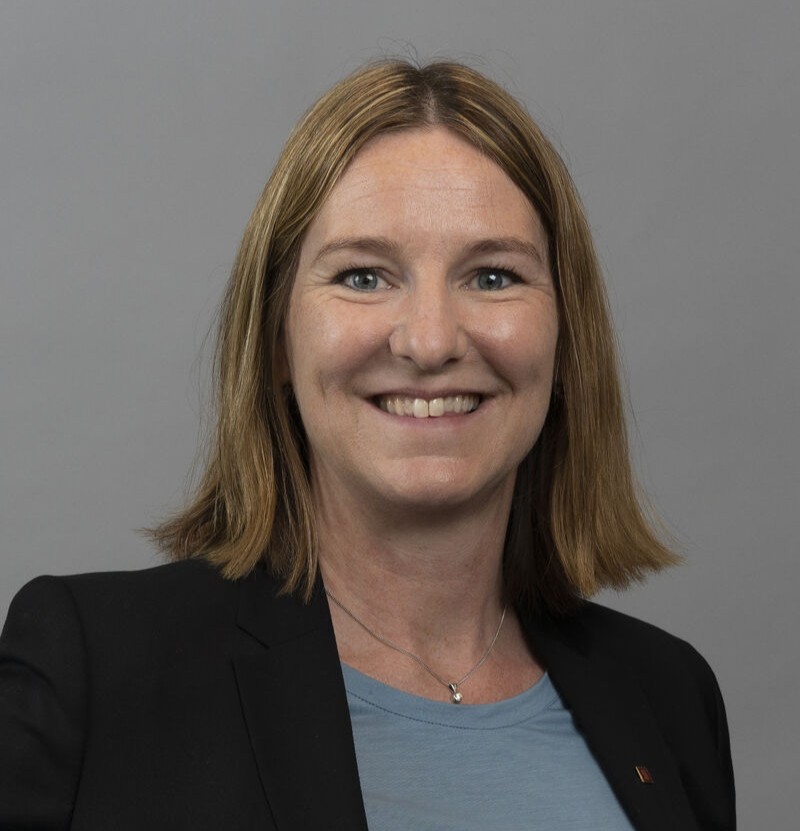
A working group, chaired by Hildegunn McLernon, has been established to prepare a joint and coordinated roadmap as input for the future research and innovation programme of the EU.
In order to prepare for the next research and innovation programme of the EU, the Waterborne Technology Platform (TP) established a working group. Recently, the Board of Directors appointed Hildegunn McLernon, Kongsberg Maritime, as Chair of the working group. The Board also appointed the following members of the working group: Axel Hahn (German Aerospace Center), Arber Haxhiu (ABB’s Marine & Ports division), Kent Åstrand, (Wärtsilä Marine), and Arthur-Hans Thellmann (Meyer Werft).
The Waterborne TP is the European research and innovation platform for the waterborne industries, providing policy guidance to the European institutions regarding research, development and innovation (RD&I), as well as the deployment of these innovations. Furthermore, the Waterborne TP coordinates the private side of the Partnership on Zero-Emission Waterborne Transport (ZEWT) with the European Commission. Currently representing 132 members, from 19 European Member States and four other European Countries, the Waterborne TP has a significant footprint in the European Union. Research, development, innovation and its deployment are critical for a resilient, competitive and sustainable European waterborne sector.
The European waterborne sector is a dynamic and interdependent ecosystem, featuring a diverse array of public and private stakeholders. These stakeholders include classification societies, shipbuilders, shipowners (both maritime and inland navigation), equipment manufacturers, ports, infrastructure and service providers (e.g. dredging), as well as universities and research institutes. While large enterprises play a key role in the development and innovation in the value chain, small and medium sized enterprises (SMEs) form the largest part of the EU waterborne sector and play a crucial role in the sector and the broader European economy.
The European waterborne sector is committed to mobilizing significant investments in research, development and innovation, education, training and skills development, and deployment across the full value and supply chain, including SMEs, start-ups, and regional actors. This will significantly contribute to achieving the objectives of the upcoming industrial waterborne and port strategies enhancing the technology leadership of the European waterborne sector. The future focus of research, development, innovation and its deployment will be centred around the digital and green twin transition, and the Waterborne Technology Platform established a working group to develop a coordinated and joint roadmap as input for the next research programme of the EU, which will start in 2028.
“It is an honour to continue the good work that has been done previously, and to build on foundations of the current Partnership on Zero-Emission Waterborne Transport. We will steer towards tangible results to help the waterborne sector in its green and digital transition. The sector is a highly diverse sector with many different stakeholders, and they are all represented in the Waterborne Technology Platform. Assisting the sector towards achieving a resilient, competitive and sustainable future is our key objective,” said Hildegunn McLernon, SVP Technology Office, Kongsberg Maritime.
Jaap Gebraad, Secretary General, Waterborne TP, added: “A joint and coordinated approach towards research, development, innovation and its deployment will be key to achieve the objectives of the upcoming industrial waterborne and port strategies. This entails the development and implementation of a joint roadmap by a highly diversified and interdependent ecosystem, public and private alike. In that sense, the renewal of the current Partnership on Zero-Emission Waterborne Transport, including broadening its scope, will be critical to enhance technology leadership. With a view to the negotiations on Framework Programme 10 and the related European Competitiveness Fund, the establishment of the working group is very timely.”