New orders and order books level off in Finland’s technology industry, uncertainty overshadows growth outlooks
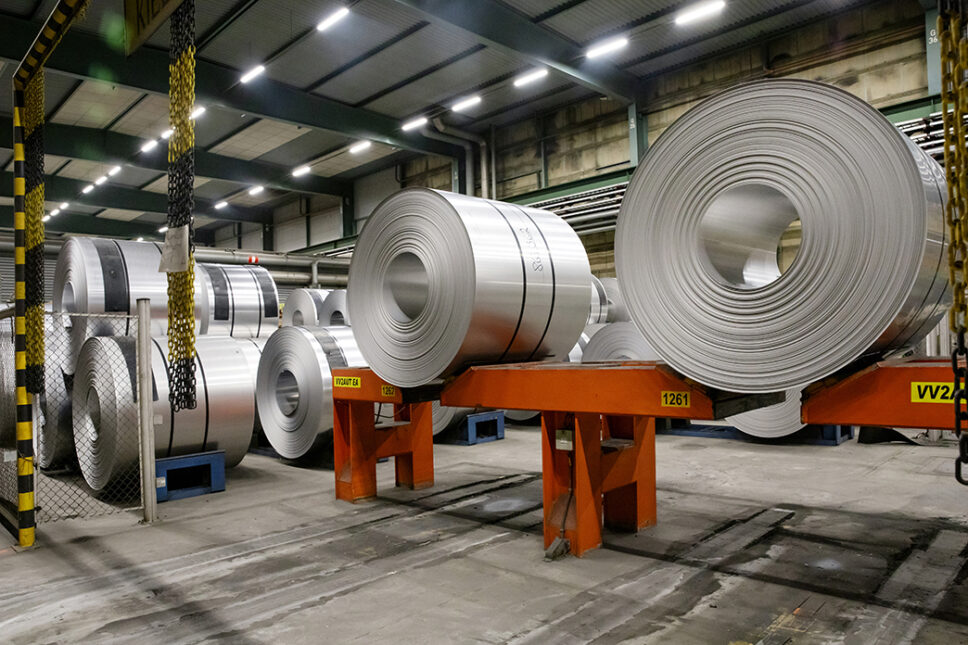
The value of new orders and order books in the technology industry was higher in January–March 2026 than a year earlier, but the trend weakened from the fourth quarter of 2025, which gained a boost from large orders in the marine industry. The growth outlook for the largest export sector is overshadowed by the unprecedented uncertainty afflicting the global economy.
The turnover of technology companies is expected to see growth in 2026 thanks to the pickup in the order intake trend at the turn of the year. The balance figure for tender requests, which reflects overall demand, has risen to its highest level since January 2022, according to Technology Industries of Finland’s latest survey of order books and personnel.
However, the first quarter did not bring significant growth to the industry, and order intakes could be described as moderate. The value of new orders in January–March was 11 per cent higher year-on-year, and the value of order books was 18 per cent higher than in March 2025. That said, the value of new orders fell 23 per cent short of the fourth quarter of 2025, while the value of order books was two per cent lower than at the end of December 2025.
“Performance in the fourth quarter was exceptionally robust. This sparked delighted optimism, which has since given way to great uncertainty. In spite of the somewhat muted market, the situation remains tolerable on the whole, and expectations are cautiously optimistic. However, the outlook for this year depends heavily on the crisis in Iran and the trend in both inflation and interest rates,” says Senior Economist Hanne Mikkonen.
The marine industry boosts orders, while mechanical engineering declines
The decline in the value of new orders compared with the previous quarter is attributable to the exceptionally large orders received by the marine industry towards the end of last year. New orders in the marine industry in January–March were lower than in the previous quarter but remained substantial.
“When assessing the economic situation, it is important to look at the trend in orders received by the largest sector of the technology industry – mechanical engineering – while excluding large individual orders in the marine industry. Worryingly, this trend declined somewhat both quarter-on-quarter and year-on-year. This weakening might be caused by seasonal variations, but what matters now is whether uncertainty in the global economy is burdening demand,” says Mikkonen.
The balance figure for tender requests, which indicates overall demand, stood at 14 in April, its highest level since January 2022.
“Despite the prevailing uncertainty, there is still market activity. Starting last year, companies have been reporting that requests for tenders are coming in, but customers are taking a long time to deliberate on their final purchase decisions and are also postponing decisions. They are hesitant to place orders due to the general uncertainty.”
Finland’s weak link is the scarcity of R&D&I funding
The resilience of companies is evident from the fact that recruitment was slightly on the rise in the first months of the year, with over 8,200 new hires in the industry. However, considered from a long-term perspective, the number of hires remains low. At the end of March, the number of employees in Finland was on a par with the end of December 2025. The number of temporary lay-offs remained unchanged at a moderate level of around 10,800.
The number of employees continued to decline in January–March in service sectors, that is, in consulting engineering and IT, but swung to slight growth in the manufacturing industry.
“Order books have strengthened, driven in part by shipyards and the defence industry. This is gradually starting to show in the employment figures as well,” says Mikkonen.
According to the TeknoBaro survey conducted by Technology Industries of Finland in March, companies still intend to significantly step up their investments in spite of the considerable uncertainty. The competitive situation of Finnish companies is further weakened by the fact that companies elsewhere in Europe receive substantial state aid.
“Even during the energy crisis, Finland’s strengths lie in clean energy and critical technologies for the green transition and as designated by the EU. Our weak link is still the scarcity of R&D funding for businesses, especially with respect to innovation funding to support growth. In Finland, companies bear disproportionately higher investment risks than their international competitors, and this is at odds with Finland’s growth objectives,” says CEO Taina Susiluoto.
Stimulating corporate investment intentions calls for solutions not only for the investment environment but also for commercialisation and the promotion of exports. For instance, efforts to develop a hybrid model for mining taxes and a tax rebate model for data centre investments should be fast-tracked.
“To support their mood of cautious optimism, companies need a long-term outlook on the predictability and competitiveness of the business environment. Companies channel their research and product development investments to the locations with the strongest expertise, funding and business environment. This is crucial for Finland’s future growth and well-being,” says Susiluoto.
More information
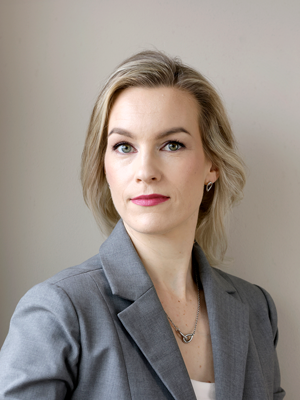
Mikkonen Hanne
Senior Economist – Economic Development and Investment Technology Industries of Finland