
The world’s cleanest aluminium products are made in Ostrobothnia – How Mäkelä Alu achieved its ambitious climate targets
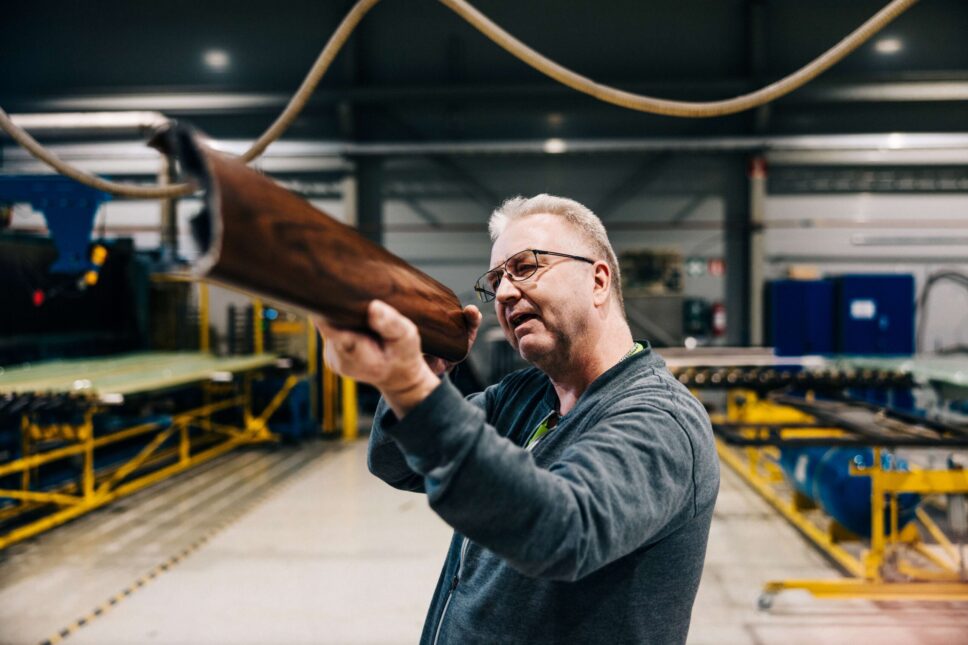
Producing aluminium products requires a lot of energy, and Mäkelä Alu wants to keep its environmental footprint as small as possible. The company has now achieved carbon neutrality in its own manufacturing and internal logistics. But for these climate-conscious people of South Ostrobothnia, that is just one milestone: the ultimate target is to become carbon negative.
About five years ago, Mäkelä Alu, a South Ostrobothnian supplier of aluminium products and services, pledged to be carbon neutral by 2025 – an ambitious timetable by any standard.
The target was a tough one. The aluminium industry accounts for two per cent of global carbon dioxide emissions. While most of the climate burden comes from the production of primary aluminium, the manufacturing of aluminium products is hardly low emission either – unless you really put your mind to making it so.
And that is exactly what Mäkelä Alu set out to do – for a simple reason.
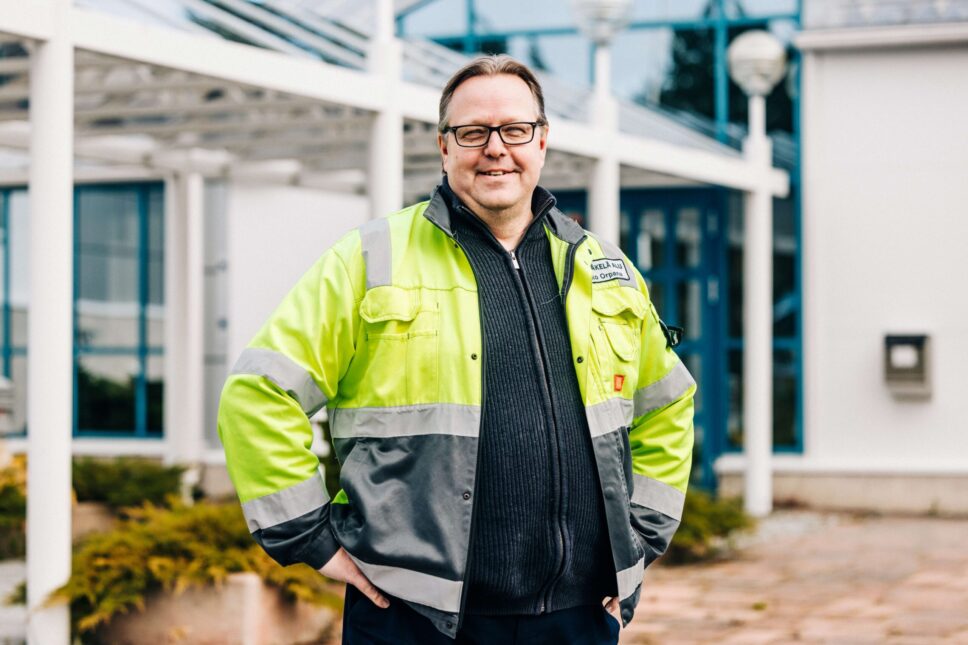
“Our owner has long believed that the Earth is a nice place, and it would be nice to leave it in as good condition as possible for future generations,” says Marko Orpana, the company’s CEO, summing up the ethical motivation behind the project.
The project did not begin entirely from scratch, as Mäkelä Alu had already been measuring and trying to reduce its emissions for some twenty years.
Momentum for the carbon neutrality journey came from the European Union: the company received 27 per cent co-funding for its EUR 10.7 million project from the EU recovery fund. Orpana emphasises that this funding accelerated the project – the investments would have been made eventually in any case. With annual net sales of around EUR 80 million, this was a significant investment in the company.
Many paths forward
Mäkelä Alu set out to achieve carbon neutrality through eight separate sub-projects.
“Based on our carbon accounting, we knew where the biggest emissions from our production process and internal logistics came from, so that is where we focused our efforts,” says Päivi Venesoja, Sustainability Director.
One major project involved converting the billet heating furnaces of Press Line 3 at the Luoma-aho plant to run on electricity. This also required a major upgrade of the plant’s electrical infrastructure to support the new technology. The change reduced CO2 emissions by 900 tonnes per year.
In the foundry, heat recovery was introduced, and the captured heat now preheats the water used in the paint shop – reducing CO2 emissions by another 300 tonnes per year. Likewise, waste heat now heats the water at the company’s paint shop in Kouvola, cutting emissions by a further 200 tonnes.
And that’s not all.
“We replaced the entire energy system of our anodising plant. We now use heat pumps and waste-heat recovery, which reduced our consumption of LPG to a very low level. The plant is not yet fully carbon neutral, but its emissions have fallen by 800 tonnes – about 85 per cent,” says Venesoja.
The remaining emissions from the anodising plant will disappear once fossil LPG is replaced by biogas.
“This whole project is a huge source for pride for us. We have acted, and continue to act, instead of just talking about it,” says Marko Orpana, CEO.
A large solar-panel field is currently being completed at Luoma-aho.
“It will take our energy use another step closer to a lower-emission future.”
Local carbon offsetting
As not all of Mäkelä Alu’s operations are yet fully carbon neutral, the company has offset the remainder to make them greener.
The company is reforesting a disused field in the nearby area, planting 1,000 spruce and 1,000 pine seedlings per hectare. The total area is large enough for Mäkelä Alu to declare carbon neutrality once the forest matures.
“Our carbon-sequestration calculations are based on Finnish scientific data – the most accurate available,” says Päivi Venesoja.
The local nature of the offsetting was also important to the company, and a great deal of research went into this.
“People say we’re doing some crazy things here at Luoma-aho.”
Orpana, the CEO, admits that the original aim had been to achieve more without offsetting.
“Unfortunately, life isn’t all a bed of roses. The current situation in the construction market has challenged us, and we have had to postpone some investments. But we must also look after the company’s wellbeing. We can’t carbon neutralise ourselves out of the market, even if that would bring our emissions close to zero,” Orpana laughs.
An example that creates competitive edge
The green transition is not slowing down, and pioneering companies are beginning to see a return on their investments.
“Especially in export markets, our low emissions are a constant topic of discussion, and increasingly in Finland, too, despite the current downturn. I definitely see this as a strategic competitive advantage,” says Marko Orpana.
Mäkelä Alu’s climate work has already earned it international recognition. The company received an award at the UN COP 2024 Climate Conference in Baku, winning the Net Zero Industries Award. While the marketing value of such an award is difficult to measure, it strengthens trust among customers who care about the environment.
Within Mäkelä Alu, there is a strong sense that the company is already a pioneer in cleaning up the metal products industry. Yet, it has set its sights much further. The next step is to make all operations truly carbon neutral and then to move towards carbon negativity.
“People say we’re doing some crazy things here at Luoma-aho. And I always reply that no, we’re just doing the right things. Some think we are a bit over-eager, but our attitude is that others do what they can – we do what we want,” says Marko Orpana.
Mäkelä Alu’s tips for achieving carbon neutrality
- Assess your current state and target. Know exactly where your emissions come from and what you want to achieve.
- Draw up a roadmap. This helps you prioritise actions and organise projects efficiently
- Maintain a clear overview of your project at all times. This provides a foundation for continuous improvement and helps avoid unnecessary investments.
- Management commitment is essential so that employees have the power to act.
Text: Harri Junttila / Pictures: Tuukka Kiviranta