
Sweco seeks growth from circular economy commitment: measurable savings for clients and real results in projects
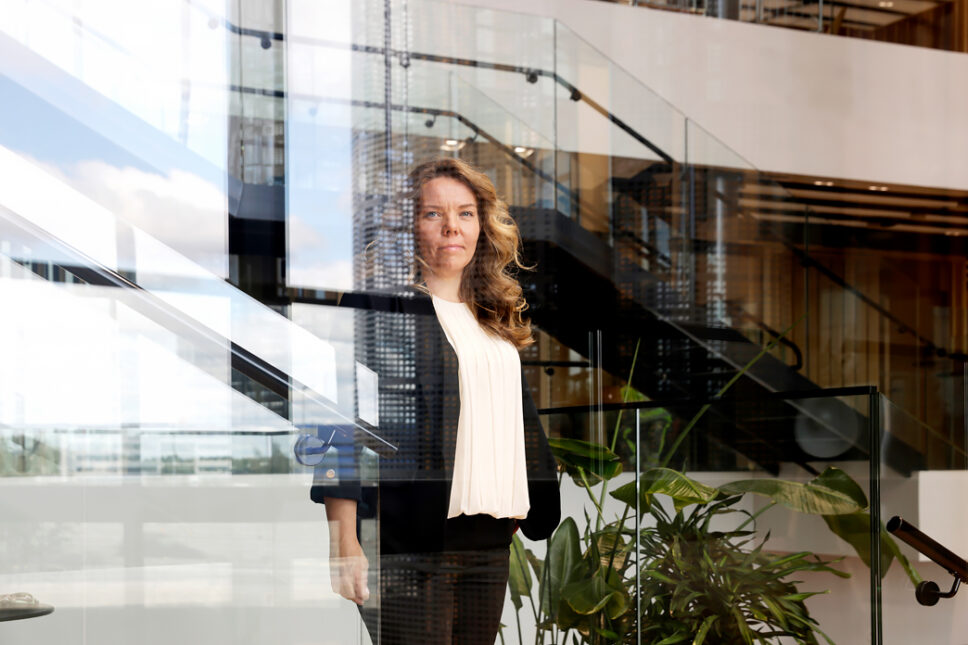
The engineering and architectural consultancy Sweco signed the Finnish circular economy Green Deal commitment last year. For Iida Vakkuri, Sweco’s Chief Sustainability Officer, the aim is simple: Sweco wants to ensure that strategic promises are reflected in everyday work. “We have clear financial goals, and we want measurable results. The reduction in carbon footprint and material use in our projects are visible to clients as lower costs.”
Sweco’s Chief Sustainability Officer, Iida Vakkuri, says the starting point for the circular economy commitment was simple: the company’s strategy already included a commitment to mitigating climate change and promoting sustainability goals.
“Participating in the Green Deal made it visible and measurable for ourselves that we are actually doing what we say we are doing,” she explains.
• The circular economy Green Deal, or circular economy commitment, is a voluntary strategic pledge designed to promote the transition to a circular economy and reduce natural resource use with the participation of society as a whole. It is a voluntary public pledge by a company or organisation to promote the circular economy with concrete actions and measurable goals.
• The commitment is part of implementing Finland’s circular economy roadmap, under which companies pledge to transform their production, services and business models towards resource efficiency.
• The commitment may include material efficiency, recycling, the use of renewable raw materials or the development of new service models.
• The goal is to accelerate the shift from a linear take-make-dispose model to a sustainable circular economy which saves natural resources, reduces emissions and creates new business opportunities.
From a business perspective, Sweco is seeking growth through the commitment in sustainability-related consulting. According to Vakkuri, the goal is to offer clients better alternatives that enable them to save both resources and money. The commitment also has broader societal goals.
“We want to do projects that boost the national economy, create jobs and support the Finnish exports. This creates well-being all around,” says Vakkuri.
Concrete results in Sweco’s projects
A practical example of a circular economy project is the renovation of the Koskela tram depot in Helsinki, where Sweco has been involved from the start.
“The project follows the City of Helsinki’s low emission strategy. Our goal is to reduce carbon emissions by at least 30 per cent across the entire project. In practice, this has meant a smart demolition process involving the assessment of all reusable materials in the area. Bricks, beams and other materials will be repurposed, and a rainwater recycling system will be installed in the area. A key goal is also to improve the site’s nature values,” Vakkuri explains.
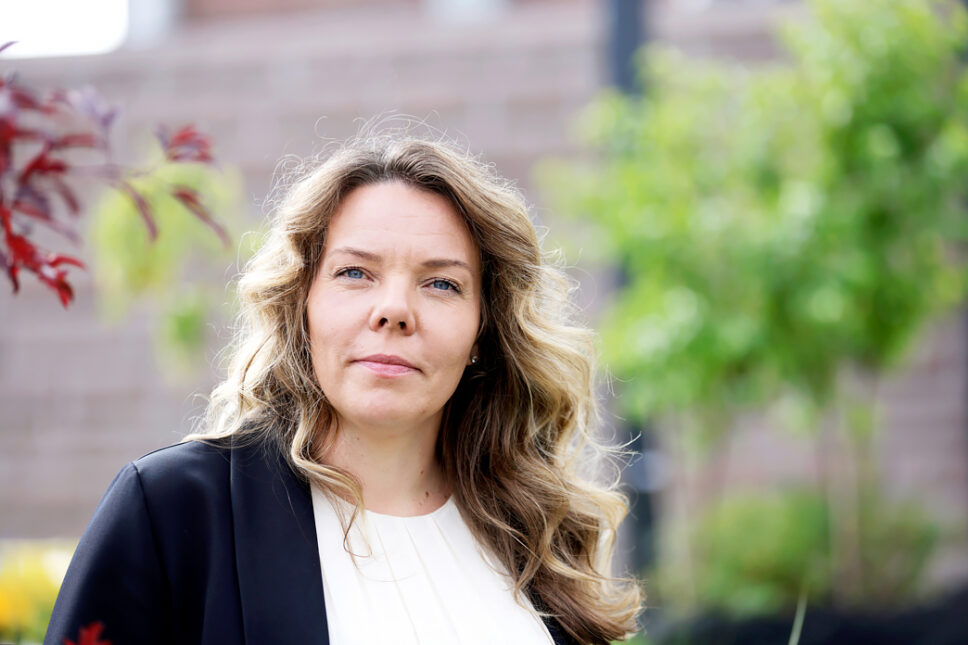
However, the success of projects depends on clients and contractors being fully engaged:
“If the client is not prepared to change how it operates, the potential for success is limited. Reuse can only work if the entire chain is involved,” Vakkuri says.
Driven by investor requirements
The circular economy commitment has changed life at Sweco in many ways, including through training. The company has a unit of nearly 200 sustainability consultants, and it has also trained additional project-specific sustainability specialists.
“This enables us to bring sustainability management into projects more systematically. Large projects and investments now require concrete and measurable sustainability goals. Money is a better incentive than regulation. Investors are asking how we can demonstrate that the project will be implemented according to sustainability principles. This is clearly an emerging trend, and the EU’s steering mechanisms are reinforcing it.”
Iida Vakkuri, Sweco’s Chief Sustainability Officer, sees great potential in the circular economy that is not limited to construction.
“Renovation construction is a major area for us and we expect it to grow. We have discussed concepts such as designing for deconstruction, for example, where building components can be reused for different purposes. Material innovations and closed-loop industrial purposes can also open up new business opportunities,” says Vakkuri.
Client support is part of sustainability
Sweco’s role in the transition to a carbon-neutral circular economy is linked to its position as a broad-based engineering and consultancy company.
• Sector: Architecture and engineering consultancy
• Head office: Stockholm, Sweden
• Personnel: around 22,000 experts
• Business areas: Buildings and urban areas; water, energy and industry; transportation infrastructure; architecture; sustainability consulting; digital solutions
• Mission / value promise: ‘Transforming society together’ – Sweco is Europe’s leading company in engineering and architectural experts. It designs the cities of tomorrow and a more sustainable society. We combine the expertise of our 22,000 architects, engineers and other experts, and work with our clients to promote the green transition, maximise the potential of digitalisation and strengthen the resilience of societies.
“Our value promise is ‘Transforming society together’. We want to help mitigate climate change and address megatrends like urbanisation and an ageing population. This is reflected in our everyday work,” says Vakkuri.
She also emphasises the importance of supporting clients regardless of the sector.
“We help organisations build sustainability strategies and ensure that the strategies are a part of project implementation. In addition, we understand the needs of financiers and know how to produce documentation that convinces banks and investors,” Vakkuri says.
Carbon footprint as a measure of property value
According to Vakkuri, the circular economy will come to shape all material-intensive business in the future. One interesting opportunity is related to the carbon footprint of properties.
“I believe that in the future, property values will also be assessed based on their carbon footprint. This creates business opportunities for the reuse of building components and materials. Building with these materials does not generate new carbon emissions.”
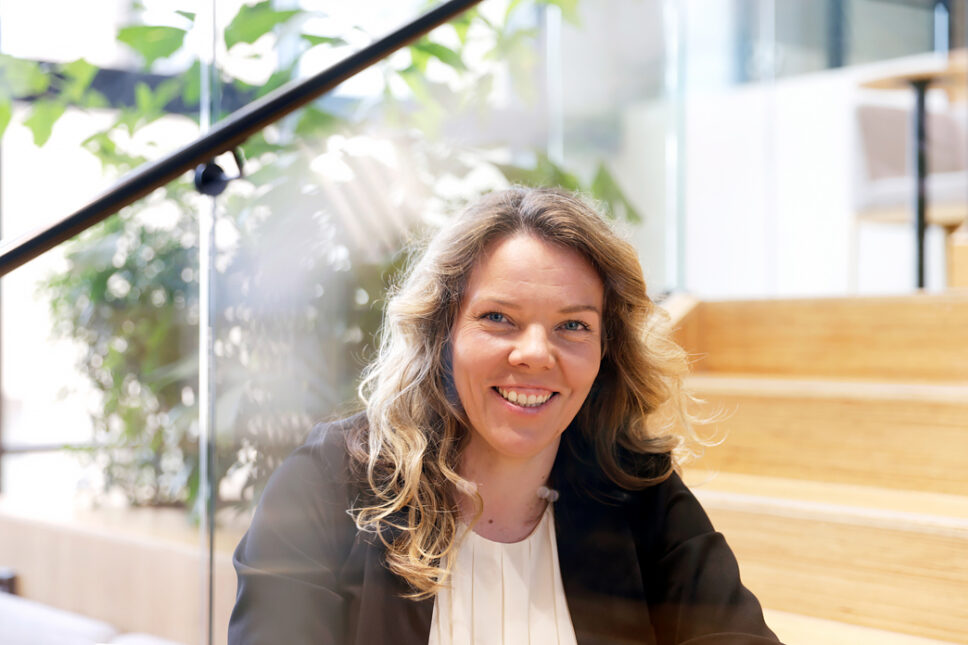
Sweco’s strong international network also allows it to share expertise EU-level projects.
“We have verified evidence that projects can promote the circular economy. We want to export this expertise to other countries and discussions are currently underway with partners in Belgium and the Netherlands on the use of our tools,” says Vakkuri.
Recycled materials must not be more expensive
In the technology industry’s circular economy programme, the circular economy is seen as a driver of sustainable growth and exports. Vakkuri recognises the same perspective in Sweco’s work.
“Finnish expertise is valued internationally. The biggest challenges come from the fact that recycled materials are not yet on equal terms with virgin materials in the market. For example, recycled plastics have limited competitiveness. Market mechanisms and certifications are needed to make these products more competitive. One thing is clear: a product made from recycled materials must not be more expensive than the equivalent virgin product.”
According to Vakkuri, old attitudes in the construction industry often hinder the adoption of new solutions.
“Innovation is welcomed, but at the same time decades of references are required. Decision-making in construction is spread across many levels. Even if the CEO has approved the use of recycled materials, at the site level, people tend to order what has been used before. This is why dialogue and cooperation are so important.”
Iida Vakkuri’s tips for companies considering a circular economy commitment
- Link it to your strategy: A circular economy commitment must be integrated into the company’s overall strategy to be effective.
- Tie it to business and metrics: The commitment must not remain an isolated promise. It must be part of everyday work, goals and business monitoring.
- Involve personnel in the process: Build an open and inclusive process where employees can contribute. This requires effort but will ultimately build a bridge from strategy to practical implementation.
Text: Mikko Viljanen / Photos: Liisa Takala