
Insta builds resilience in a changing security environment – “Resilience is directly linked to competitiveness”
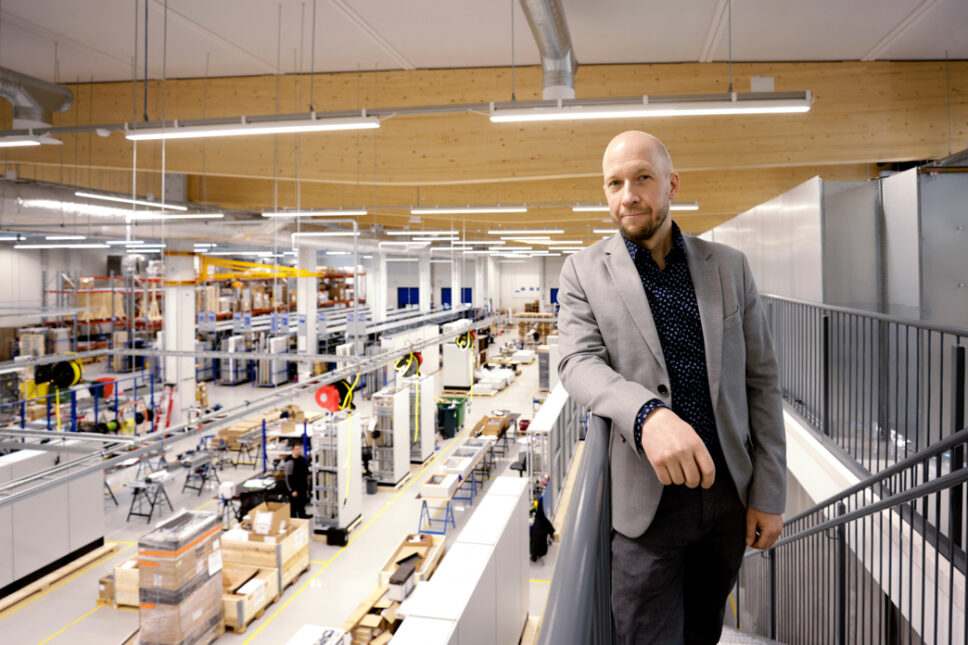
Insta has grown from a family business to a technology group employing more than 1,300 experts, with operations spanning industry, defence, cyber security and software consulting. Aleksi Salmirinne, CEO of Insta Industry, believes that Finland’s long tradition of preparedness could create increasingly strong international opportunities.
According to Aleksi Salmirinne, CEO, the core of the company’s operations lies in reliability, security of supply and ensuring that critical systems and services continue to operate during disruptions and exceptional circumstances. When nothing unexpected happens in daily life, we have succeeded. “Every day, around three million Finns use water that has been delivered and processed using Insta’s water automation systems,” says Salmirinne.
“We have always wanted to do something meaningful. That is closely connected to the values of a family-owned company: the desire to be a good employer, to take good care of our employees and to develop Finnish expertise. A thriving workforce creates customer satisfaction, which in turn generates new orders and growth.”
Under Salmirinne’s leadership, Insta Industry focuses on automation, electrification and digitalisation for industry and critical infrastructure, while the Group’s other business area, Insta Advance, focuses on defence, software consulting and cyber security.
The company is pursuing growth by strengthening its position in its existing areas of operation rather than through rapid strategic shifts. At the same time, particularly in defence technology, it has sought experience and partners in Ukraine, for example. The independent family-owned company operates in more than 50 countries.
Changes in the security environment are affecting investment
According to Salmirinne, recent changes in the security environment have highlighted the broad scope of security of supply and resilience. Disruptions can originate in energy, software, data, logistics or skills shortages, and their effects quickly spread elsewhere.
“Hybrid and cyber threats, geopolitical uncertainty and supply chain disruptions have become a real concern for us. Finland has already been relatively well prepared, but the changing security environment is visible, and uncertainty has affected willingness to invest. In some respects, we may still be in the process of fully waking up to the current situation.”
Salmirinne says that resilience in industry does not arise from a single secure system or one right choice. What matters is how the wider system continues to function even when pressure is applied to several areas at the same time.
“Dependency management is a key issue. Is data stored on servers here in Finland or somewhere else? Is the digital side of production in order? How resilient are dependencies related to energy and communications networks, and is skilled labour available? All of these factors play a role, and the overall picture is very complex,” says Salmirinne.
Resilience must be developed through the normal market economy
According to Aleksi Salmirinne, CEO of Insta Industry, resilience is directly linked to competitiveness. If critical functions are to be maintained in all circumstances, more is needed than regulation and contingency plans. Investment, maintenance, lifecycle services and the ability to sustain systems even when international connections are under pressure are also required. At the same time, these needs can generate new business.
“Resilience must be developed here through the normal market economy. No one has enough money to build it in isolation from everything else. It has to emerge through Finland being a competitive place for industrial operations, with the necessary know-how and critical infrastructure.”
Salmirinne believes Finland’s strengths lie in sectors where critical functions and technical expertise intersect. Geography and history also play a role: Finland has had to think about preparedness for longer than many other European countries.
“In many respects, Finland has a well-developed critical infrastructure. We have advanced expertise in automation and electrification, digitalisation is relatively advanced and cyber security is at a good level. We have been developing these capabilities steadily and seriously for decades, this is not simply a reaction to the latest crisis,” says Salmirinne.
According to him, this same tradition could also offer Finland better international opportunities. The key thing would be to make better use of the country’s existing strengths and to attract more investment to Finland. In defence investments, Salmirinne emphasises dual-use solutions: funding should be channelled towards solutions that are beneficial both during crises and in normal everyday life.
“Finland must generate as much added value as possible from the raw materials we have to offer. That way, the ecosystem built around technologies, expertise and people remains in Finland, and that is precisely what strengthens resilience for the future.”
Supply chain disruptions can undermine our resilience
According to Salmirinne, the fundamental issues remain the same across Europe, but the scale is larger. Operational capacity depends on chains extending from energy and logistics to telecommunications, payments, medicines and food. If proactive preparedness is not strengthened, disruptions will quickly become apparent in everyday life.
“Disruptions to supply chains can undermine our resilience, which is based on the smooth functioning of everyday life: access to water, food, medicines and even the functioning of our payment cards. It’s not enough simply to think about these issues, they also need to be tested and practised,” says Salmirinne.
“By ensuring the functionality of critical infrastructure, we can directly support people’s ability to function and their well-being.”
Digital sovereignty is part of the same broader picture. For Salmirinne, this means having the ability to manage data, digital identities, certificates and encryption independently or together with trusted partners. In that sense, the issue is not only about cyber security, but also about competitiveness, independence and freedom of choice.
“Digital sovereignty means having trusted partners, relying increasingly on our own solutions and continuing to develop them. It makes sense to cooperate with partners you are prepared to rely on even in a crisis.”
AI is an excellent tool but it also expands the attack surface
Salmirinne sees EU regulation related to resilience as a step in the right direction, but he emphasises the role of implementation. What matters is not only what is required, but how thoroughly preparedness measures are put into practice. One additional layer has now emerged: artificial intelligence, which can strengthen forecasting and situational awareness while also introducing new interfaces into systems.
“AI can strengthen security, but it can also create new vulnerabilities. In forecasting, situational awareness, disruption detection and anomaly identification, AI is in many ways an excellent tool. At the same time, data, model chains and automation increase the number of interfaces and the overall attack surface, which also increases risks.”
• Founded: 1960
• Headquarters: Tampere, Finland
• Main activity: Technology group operating in industry, defence and aviation, cyber security and software consulting
• Personnel: 1,336
• Net sales in 2025: EUR 197.8 million
Text: Mikko Viljanen
Photos: Liisa Takala