
IQM exports quantum computers around the world – “Quantum computing is our next major opportunity”
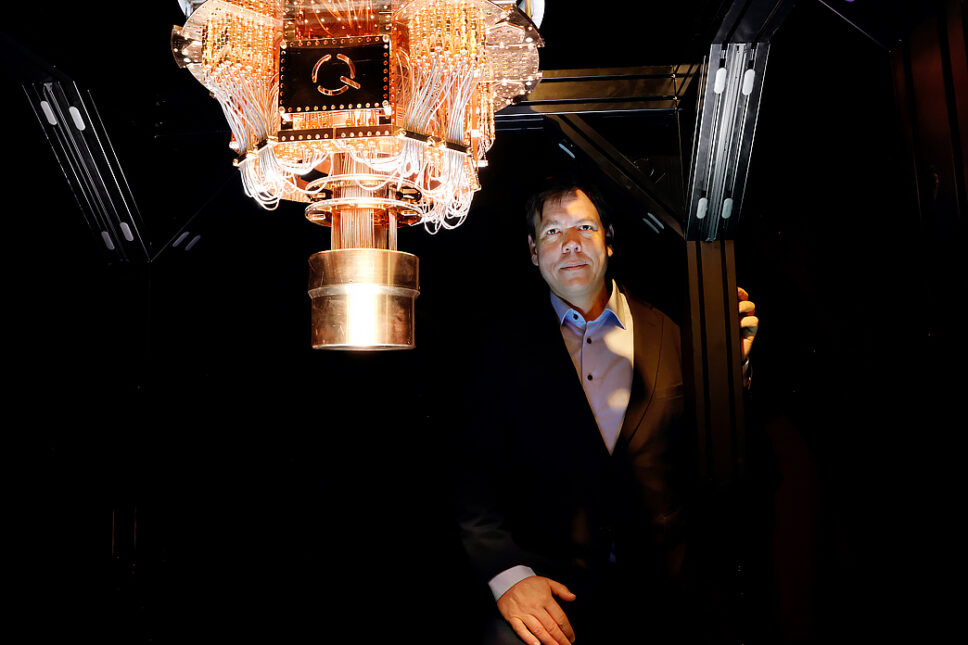
The development of quantum technology has become a global race that will shape future technological dominance and industrial competitiveness. Finland and Espoo-based IQM are among the frontrunners in this race. “We have an order book worth around USD 100 million. When a customer buys a quantum computer, it has to work without a scientist sitting next to it,” says Juha Vartiainen, IQM’s Chief Global Affairs Officer.
The Finnish company IQM Quantum Computers builds and installs its quantum computers mainly in high-performance computing centres, where they are connected to existing systems. Quantum technology is used when classical computing alone is no longer enough. A practical example in Finland is the LUMI supercomputer in Kajaani, which is used for cutting-edge research throughout Europe.
IQM’s approach is different from many other companies in the industry, who offer remote cloud computing or closed systems or focus on developing their technology without selling it.
“We no longer make laboratory equipment. When a customer buys a quantum computer, it has to work without a scientist sitting next to it,” says Juha Vartiainen, IQM’s Director of International Affairs and co-founder.
• Founded: 2018
• Headquarters: Espoo, Finland
• Sector: Development and manufacture of quantum computers
• Personnel: approximately 300
• Net sales: over USD 35 million (2025)
Exceptionally large investments – IPO ahead
IQM’s chosen strategy and progress and the hype surrounding the quantum sector have attracted major investments. The company has raised more than USD 600 million (roughly EUR 550 million) in funding. At the end of February, the company announced its plans to pursue a stock market listing in both the United States and Finland. IQM is currently valued at USD 1.8 billion (roughly EUR 1.6 billion).
Public funding has also played a major role in IQM’s development, particularly in the early stages. During the COVID-19 pandemic, the Finnish government allocated approximately EUR 20 million from supplementary budget funds to VTT Technical Research Centre of Finland to procure a quantum computer. IQM was selected as the supplier for this joint development project. According to Vartiainen, the project was a turning point for the company: it secured IQM’s first major customer and rapidly elevated the young company to the ranks of international quantum companies.
“This is like a race to secure our position for the future.”
The scale of investment is exceptional, especially for a technology whose commercial applications are still in their infancy. Building quantum computers requires long-term development work, specialised hardware and cleanroom facilities.
“This is a hardware business and a deep-tech operation. It requires a lot of capital, but at the same time the business logic is that we can sell hardware and systems at a very high price. This is not like a software company where a few people build a product on laptops. This is about building physical infrastructure and technology based on years of research and product development.”
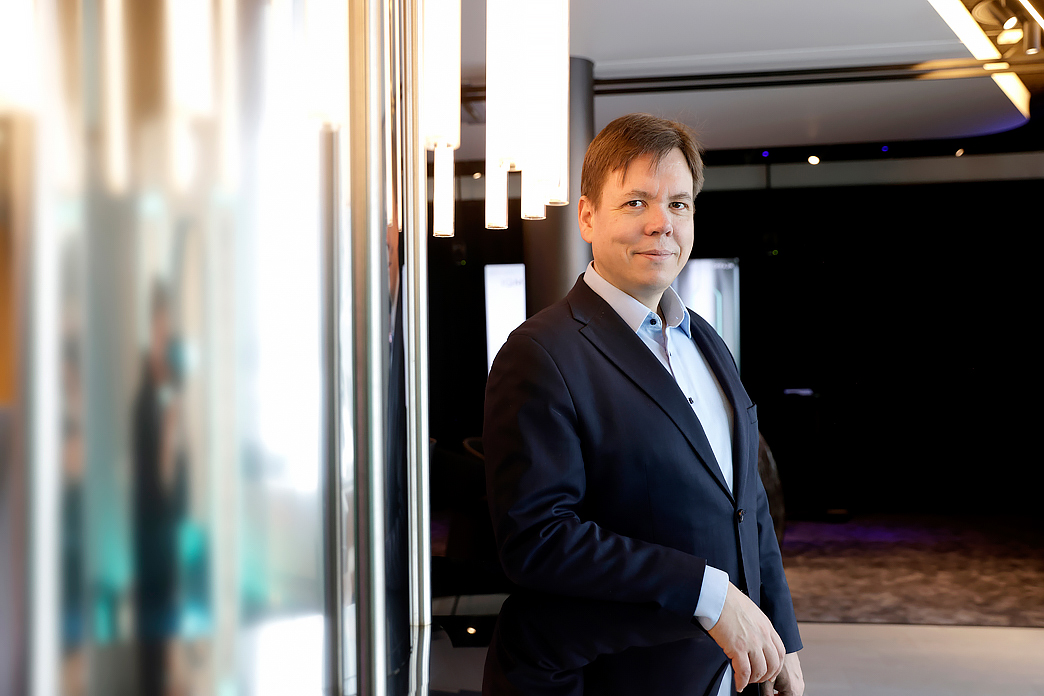
IQM’s order book has grown rapidly. This sets it apart from other companies whose primary focus is on research or technology development but who do not have a similar volume of customer deliveries.
“We have an order book worth around USD 100 million, and we are constantly delivering equipment. We’ve exported systems to Europe, Asia and the US, and at best we’ve delivered, installed and tested hardware for a customer within three months.”
Finland among the leading countries in quantum technology
According to Vartiainen, Finland ranks among the global leaders in quantum technology development. In particular, the Helsinki region has developed into a cluster where research organisations, companies and supply chains are advancing the sector together.
“Finland has a strong quantum ecosystem – a quantum cluster. Bluefors, for example, is the market leader in cooling solutions in its field. There is also a large number of growing quantum technology companies here, and new ones are springing up all the time. In a European comparison, the Helsinki region’s cluster ranked second, with only Cambridge considered to have more intensive activity.”
“Collaboration plays an important role in how the sector develops.”
Finland and IQM are involved in fierce international competition in the quantum field, involving major powers and technology giants, such as Google, IBM and Microsoft.
“Huge sums of money are being poured into this sector. Companies are prepared to operate at a loss for a long time because quantum technology is seen as strategically important. This is like a race to secure our position for the future,” says Vartiainen.
The geopolitical situation directly affects how business can be developed. Quantum computers are among the technologies subject to strict export controls. At the same time, technological self-sufficiency is becoming increasingly important.
“We need to carefully assess which foreign customers we can sell to. At the same time, we can offer a European alternative where the supply chain is based here and not affected by global geopolitical supply chain risks.”
Employees include leading scientists and watchmakers
The development of quantum computers combines theoretical research with very precise and reproducible production processes. This is reflected in IQM’s recruitment strategy. Alongside international top researchers, the company also recruits highly skilled professional workers, including graduates of the Finnish School of Watchmaking in Espoo, for example.
“Quantum technology has a certain aura around it, but in practice it’s very much engineering work. We collaborate with Aalto University and VTT, and internationally with the Technical University of Munich, UC Berkeley and the University of Tokyo, among others. Collaboration plays an important role in how the sector develops.”
Risks and uncertainty have decreased
IQM is still in its growth phase, but the direction is clear.
“Net sales in 2024 were around USD 17 million, and it is expected to double on last year. This is not yet a profitable business, but at this stage growth and building market position are more important.”
The company’s development is driven by the idea that the technology is moving from research into practical applications. Vartiainen says that while there are still risks, the uncertainty of the early years has decreased significantly.
“We now know what the market needs and we are able to deliver it. Both the technological and commercial risks are significantly lower than they were at the beginning. We aim for strong growth and to gain global market share.”
Juha Vartiainen’s three messages to decision-makers
- Public investment should support domestic technology. Public procurement and investment should be directed towards Finnish and other European high-tech solutions. This would accelerate the adoption of new technologies and support the growth of businesses.
- Make taxation and investment smoother. Investment should be encouraged through taxation. For instance, allowing the reinvesting of proceeds from exits into start-ups without immediate taxation, as well as developing fund structures, could increase the movement of capital.
- Reduce regulation and attract more capital to Finland. Finland should actively attract foreign venture capital investors and ensure that the operating environment remains competitive. At the same time, regulation, especially in Europe, should be reduced so companies can scale up more quickly in global competition.
IQM is an American-style success story in Finland
IQM’s development story stretches back decades and passes through science fiction and the pandemic to the present day, where functional quantum computers are being produced. Director of International Affairs Juha Vartiainen describes IQM’s story as an “American-style move” in Finnish conditions:
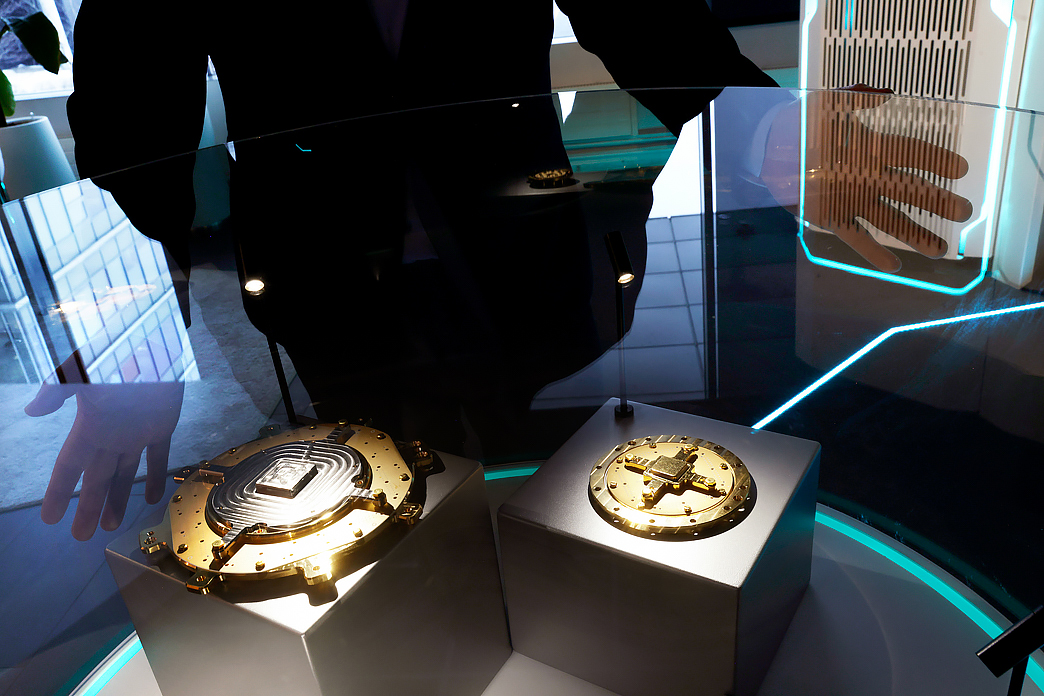
Building quantum computers requires long-term development work, hardware and cleanroom facilities.
“Our story goes back 60 years to technical universities and the low temperature laboratory, where world records in low-temperature physics were once achieved. In the 1990s, research moved towards nanotechnology and nanoelectronics, which also laid the foundations for quantum computing.
One important moment came in 2001, when visiting Japanese professor Mikio Nakahara gave Finland’s first lectures on quantum computing. I was a student at the time, and Mikko Möttönen, now a professor at Aalto University and one of the founders of IQM, was at the same lecture. This is where the idea began.
We both conducted research in academia for a long time. Quantum computing was taught and developed in Finland, but no companies emerged. The idea of starting a company had existed since our student days, but it ultimately took 17 years before we set up IQM in 2018.
At that time, the sector was still largely science fiction, and the technology was not ready. The situation started to change in the mid-2010s, when quantum technology start-ups began to emerge in the US and venture capital started to flow into the sector. That was when we realised this was truly starting to happen.
In 2019, we received EUR 11.5 million in funding for IQM. At that point we were essentially four people and a set of business cards – and not much else. We had a great deal of research behind us, but no real business yet. We found investors with the ambition to build the best quantum technology company in the world.
For a while it looked like COVID-19 would bring everything to a halt. Recruitment was difficult, we couldn’t meet people and we couldn’t build partnerships.
We decided to do things differently. We set out to find our first customer and to promote the idea that Finland needed a quantum computer. Eventually, the government funded the procurement and we won the tender. That project was a groundbreaking for us.
At the same time, we decided to invest boldly in sales, marketing and recruitment. We didn’t want to remain an academic research team – we wanted to build a major company. We sought talent from Finland and across Europe and actively used direct recruitment.
In fact, this worked surprisingly well during the pandemic. We were able to build a very competitive team, and once a commercial project was added to the mix, a positive cycle began.
Today, we are in a situation where the technology is competitive and the business is operational. We have supplied quantum computers to several countries, and quantum chips are being manufactured in Finland.”
Texts: Mikko Viljanen
Photos: Liisa Takala